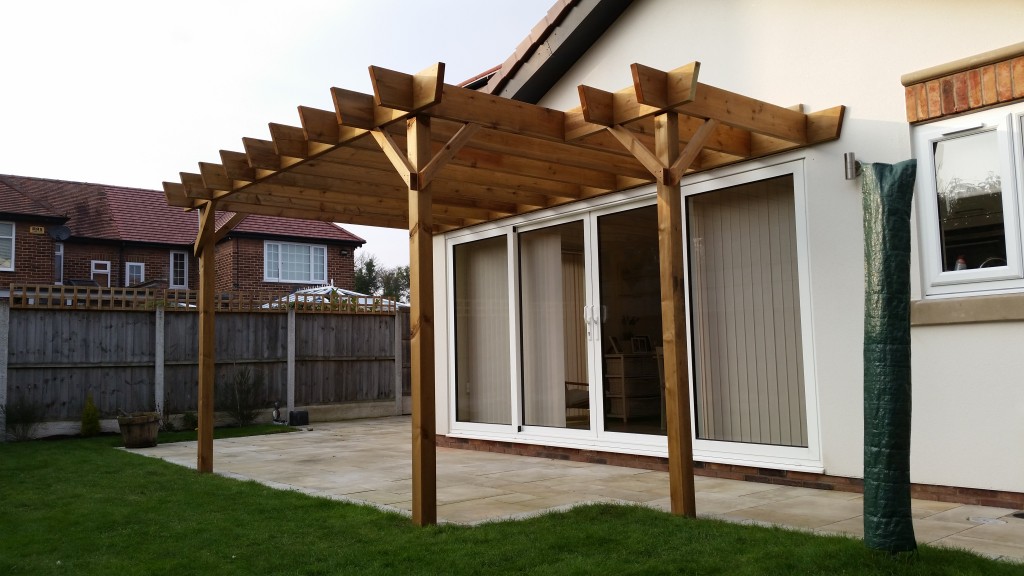
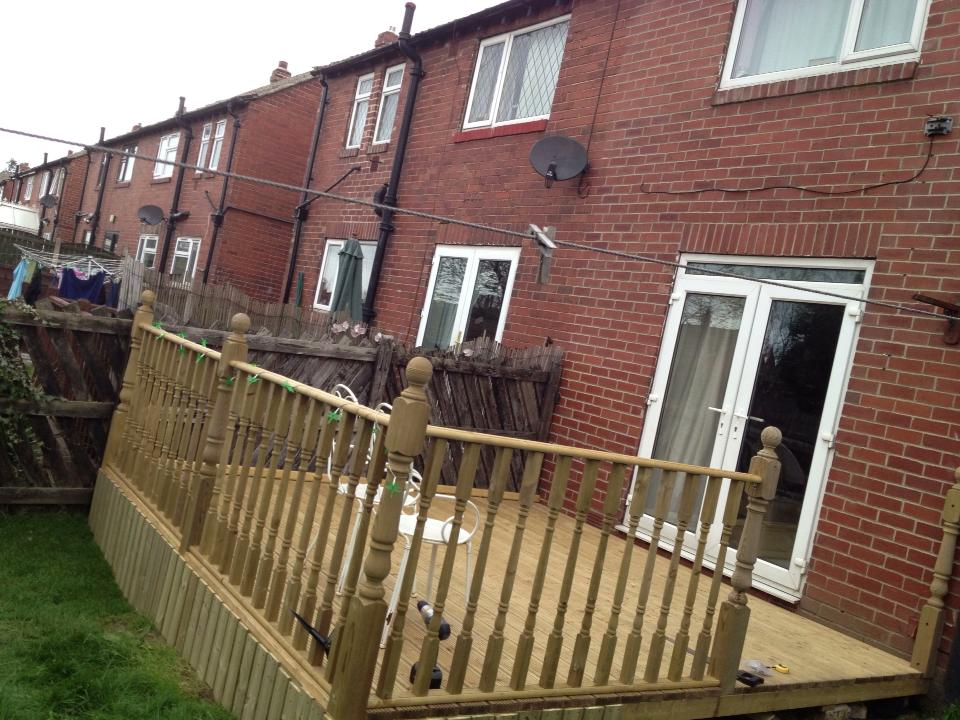
Side gates, driveway gates and garden gates
Side gates (the passage gate between house and boundary) are the most-requested job. Typically 1.8m tall, 900mm wide, built from treated softwood or iroko with a closeboard or T&G panel, hung on stainless or black-hot-dip-galvanised hinges, with a deadlock bolt inside.
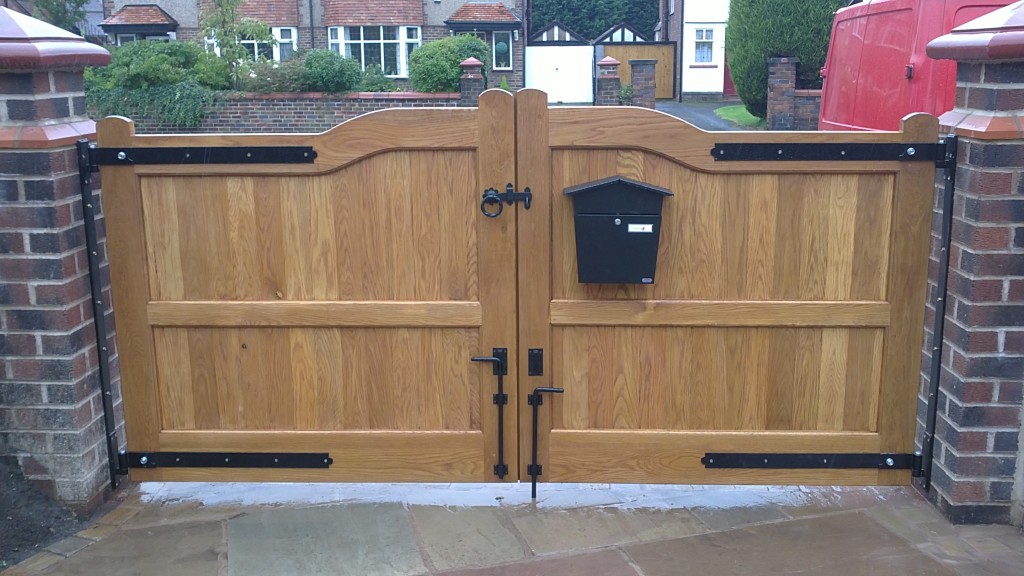
Driveway gates are more significant - typically 3m wide total (either 1.5m pair or a single 3m leaf), 1.4-1.8m tall, and often the focal point of the front of the house. I build in iroko or sapele hardwood for longevity, or powder-coated steel frames with timber infill for contemporary properties. Gate posts are a critical element: 150x150mm or 200x200mm section, set 900mm into concrete, dug below the frost line.
Garden gates (decorative, low-level, between front and rear garden or onto a bridleway) are the fun ones - I've built arched-top gates for cottage gardens, slatted modern gates in Ainsdale, traditional five-bar field gates for properties backing onto Banks and Tarleton.
Electric gates - operators and access control
For driveway gates I regularly fit electric operators - typically Nice, Came or BFT underground or articulated-arm operators depending on the gate style. Underground operators are more elegant (completely hidden) but require a concrete pit with drainage - fine on new installs, trickier on retrofits. Articulated-arm operators sit visibly at the gate but are simpler to install and to service.
Access control options I install include: intercom (video or audio), keypad entry, keyfob or Bluetooth remotes, smartphone app control (Gate+, Simply Unlock), number-plate recognition for trusted vehicles, and automatic opening on exit with ground loops.
Safety is the often-overlooked part of electric gates - UK law (Supply of Machinery Regs) requires force-limiting, photocell beams or pressure-sensitive edges, and a risk assessment on every install. I handle this as part of the job and provide the documentation you'd need for insurance or resale.
Hanging details - the things that separate good from bad
Posts plumb and square. This sounds obvious but most sagging gates I'm called to fix have their posts 5° out of plumb. Concrete dug 900mm deep, two bags per post, braced with two temporary struts until the concrete has cured.
Hinges hung on through-bolts, not screws. For any gate over 1m wide, through-bolts into the stile are the only reliable fix. Screws strip out under weight cycles.
The gate gapped off the ground consistently - 30-50mm is about right, enough for seasonal movement and debris to pass under, not so much that dogs or toddlers can crawl under. Check level with a spirit level the whole width of the opening; old driveways slope, and the gate needs to follow or it'll scrape.
Latch mechanism that works with fingers wet and cold. The classic night latch with a thumbturn inside and Yale-style exterior is usually the right choice - no fiddly bolts, no rattles, no frozen locks in January.