Hinged, sliding or walk-in - choosing the right format
Hinged-door fitted wardrobes are the classic option: carcass built into the alcove or along a wall, doors hinged on concealed Blum or Hafele hinges, painted or veneered to match the room. They take a bit of floor space when open (door swing) but give you full access to every part of the wardrobe at once. Best for bedrooms 3m wide and up.
Sliding-door wardrobes are my recommendation for narrower bedrooms. The doors run on top-hung Schmidt tracks (not the bottom-track tracks that break and go out of alignment), and save you the floor space of a door swing. They're ideal for master bedrooms in Southport's 1930s semis where the room has to double as walkway to the en-suite.
Walk-in wardrobes are the ultimate but need a spare room's worth of space - typically 1.8m x 2.4m minimum. I've converted many a single-bedroom 'box room' into a dream walk-in for the adjoining master, using ceiling-height hanging rails, pull-out tie and belt racks, and illuminated shelving for shoes.
Inside the wardrobe - where the design actually matters
Flat-pack wardrobes give you a hanging rail and two shelves. That's not a wardrobe design, that's a shed. A real fitted wardrobe is designed around what you actually wear: long-hanging for coats and dresses, double-hanging for shirts and blazers, wide shelving for knitwear, drawers for underwear and socks, pull-out baskets for laundry, compartmentalised drawer inserts for watches and jewellery.
Typical divisions on a four-metre fitted wardrobe: one section double-hanging (1.8m tall, split into 2x 0.9m hanging rails), one section long-hanging (1.8m tall, one rail), one section of six drawers stacked, one section of shelves from waist to ceiling. Above everything a top box for suitcases and out-of-season bedding, accessed with a short library ladder.
Lighting is a game-changer. LED strips in the top of each section turn on automatically when the door opens, making it easy to pick outfits in low light without switching on the main room lights. Cable managed, PAT-tested, plumbed into a dedicated socket.
Paint finish, natural timber or lacquered
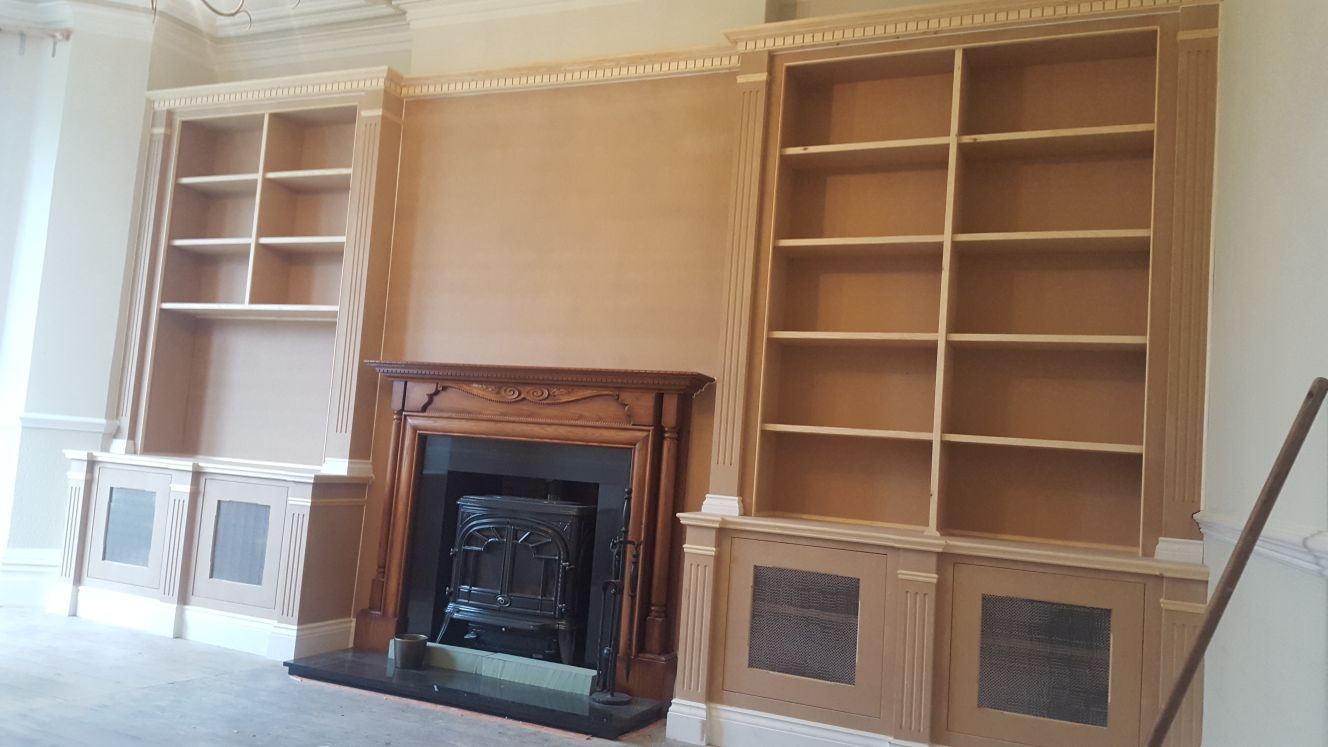
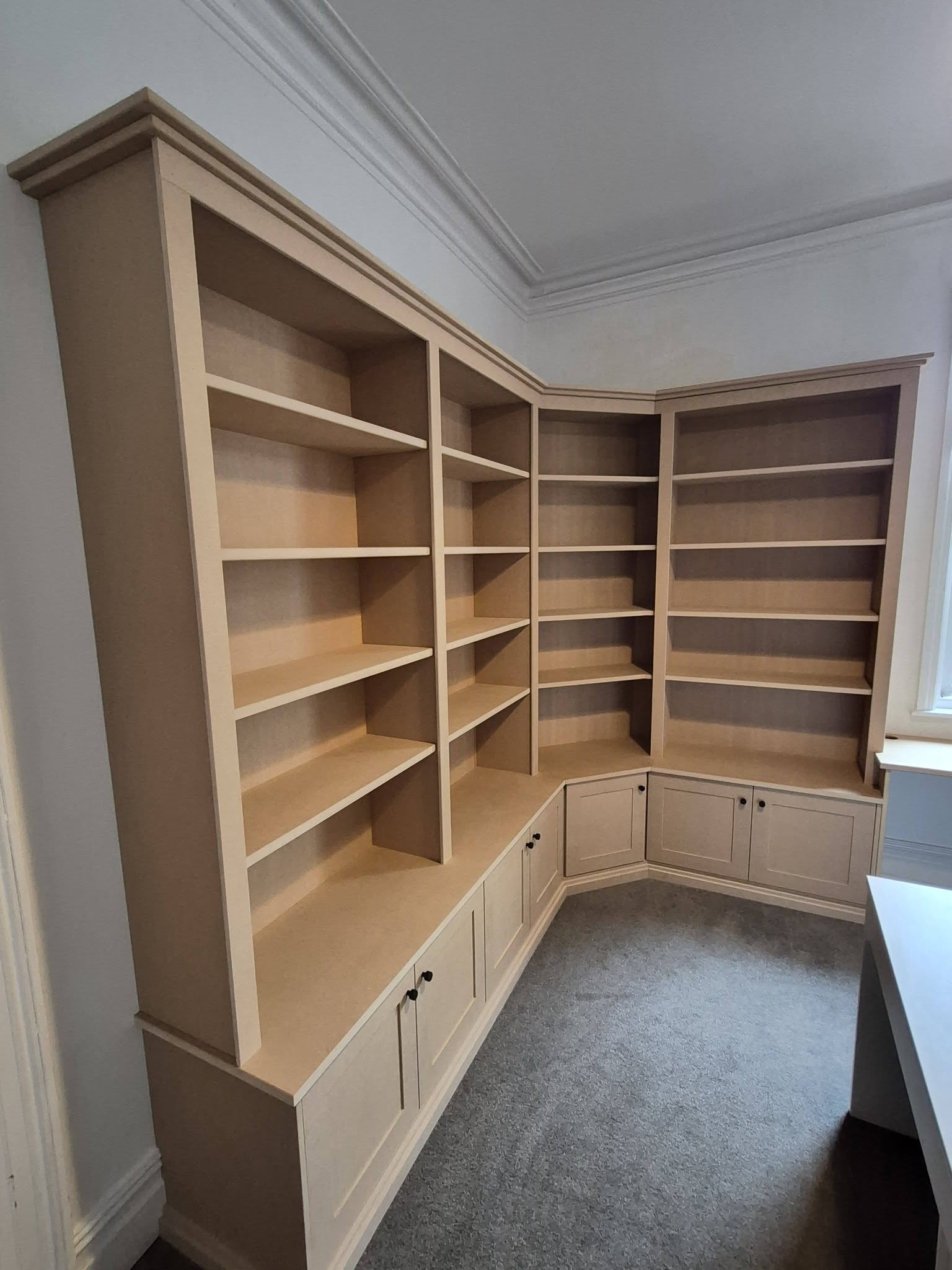
Most wardrobes are built from 18mm MRMDF carcass with tulipwood or poplar face frames and shaker or bead-and-butt doors, painted on-site in Farrow & Ball, Little Greene or Zoffany eggshell. The finish is tough enough to withstand sliding hangers and fingernails, and easy to touch up if anything happens in the future.
For a more contemporary look I'll build from birch ply and leave it raw-lacquered - the plywood edge grain shows through, giving a scandi feel. Or full-height slab doors in high-gloss lacquer, matching or contrasting the wall colour.
For period houses I sometimes work in solid oak - hand-finished with a hard-wax oil so it ages beautifully and can be refreshed with a single recoat annually.